

Community Led Play
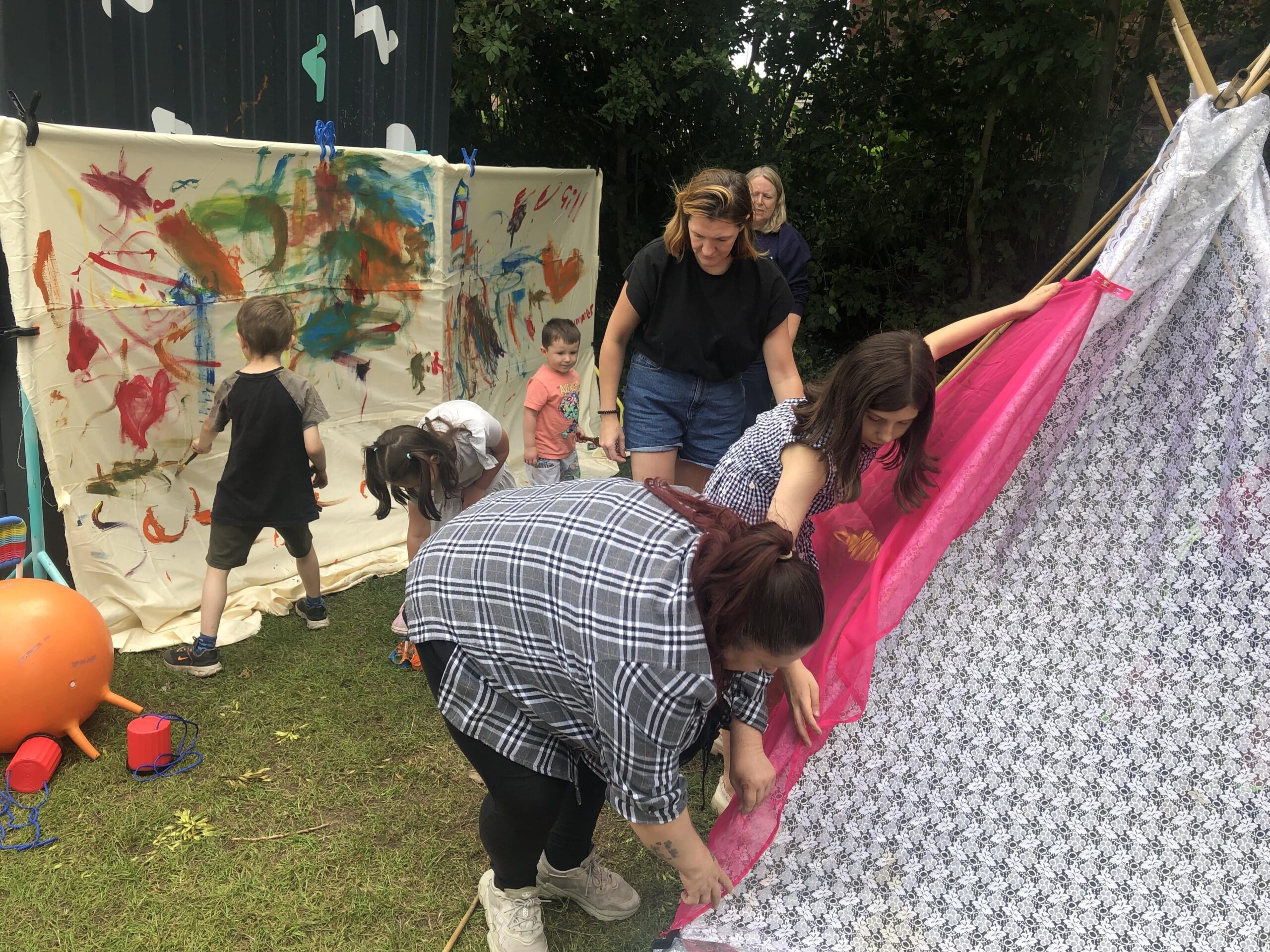
I think it’s fair to say that play has been at the heart of community building efforts in this community. From parties in the park, to afternoon tea, trips to the seaside, play in the woods and in the park. As in many communities when times can be tough, moments of joy are cherished and a good laugh is often seen as the best medicine. It’s how people get through, it breaks the ice and there’s truth in that saying, if I don’t laugh I’ll cry. Play and joy sees us through both the tough and the good times.
Locally we’ve been nurturing and cultivating spaces for community play, opening up spaces for people to get together and do the things they love and getting behind the local childrens campaign for a Playbox. We’re seeking to grow a community of play lovers, supporters and makers.
This summer, thanks to some cash from Wigan Council, combined with the expertise of Janine Lane, we were able to deepen the play locally and form the roots of a bit of a playful network, spreading community play into more neighbourhoods. We also collaborated to offer the Wigan leg of National Play Day celebrations from Mesnes Park in Wigan and Gill, the co-founder of NH&S, got behind and alongside a local parent who was keen to bring to life a local play offer for children with special educational needs and disabilities.
Janine and I both have memories of play being resourced and supported in neighbourhoods, and we’ve also been lucky to bump into quite a few parents who remember the days of play schemes and outreach teams. They instantly recognised community play from their own childhoods. If you could bottle something that expressed joy in freedom it would be the look on their faces.
At the end of the summer, Janine pulled together a report which can be read here. Aside from building the case for play for the sake of play, it contains 8 recommendations.
1.Embed play and playful neighbourhoods within Live Well and Pride in Place programmes.
2. Explore the freeing up of resources that often come with chains, and, redirect resource to community led play – for example learn from authorities using HAF monies to resource play. Shifting resource from monitoring to alongsiders.
3. Invest resource into alongside support to build on and nurture relationships that are developing, seeking fresh opportunities for collaboration and shared play opportunities across the borough.
4. Develop a dedicated play development role within the borough to coordinate play initiatives, increase knowledge of play among families and community groups, and deliver targeted training sessions. For instance, local play experts or organisations could run workshops on inclusive play practices, risk-benefit assessments, and creative play ideas for volunteers and community members. Offer ongoing guidance and practical resources to support the delivery of high-quality, inclusive play sessions, such as toolkits, session plans, and access to mentoring from experienced play workers.
5. Establish and resource subgroups within community organisations that focus specifically on play, helping to separate play activities from wider group politics and fostering a playful, inclusive environment. These subgroups can recruit play enablers, encourage new members and create opportunities for local play sessions.
6. Support local groups to access funding using more creative approaches such as those used by Grass Roots of Wigan and those being explored and developed through Wigan Borough Community First.
7. Champion the Play England 10-Year Play Strategy, “It All Starts with Play”, using its principles to inform local action, planning, and advocacy.
8.Prioritise play in local community planning, ensuring that play is a core consideration in neighbourhood design, policy-making, and consultation processes. This might include advocating for dedicated play spaces in new developments and protecting existing sites from redevelopment.
The days of being kerby street champion with a one armed killer catch seem long gone. Or are they? What might it take to rekindle playful streets, communities and town centres?
It would be really great to research play sufficiency in the town and centre the voices, hopes and visions of children from local neighbourhoods at its heart.

Community Builder
Hula Hooping and Democracy
What’s the connection between hula hooping and rekindling democracy you might wonder? I’ve been